
Full Coverage Requirements for Financed Cars — North Carolina
Free to compare
Two Requirement Systems on One Vehicle
You're financing a car in North Carolina and the lender sent paperwork mentioning full coverage. You checked the state's minimum requirements — $50,000 per person, $100,000 per accident for bodily injury, and $50,000 for property damage — and wondered if full coverage is a state mandate or something the lender added. The answer: North Carolina law does not require full coverage. The state requires only liability insurance. Full coverage is a lender requirement, not a legal one.
This creates two separate requirement systems on the same vehicle. The state's system ensures you can pay for damage you cause to others. The lender's system ensures the asset securing the loan — the car itself — stays insured until the loan is paid off. Both systems apply simultaneously, but they come from different sources and serve different purposes.
“North Carolina law requires only liability. Full coverage is a lender requirement, not a legal one.”

Compare North Carolina Car Insurance Quotes Today
Get My North Carolina Car Insurance Quote$50,000/$100,000/$50,000
North Carolina Liability Minimums
Bodily injury coverage of $50,000 per person and $100,000 per accident, plus $50,000 property damage. These limits apply to damage you cause to others, not to your own vehicle.
North Carolina Department of Insurance
What North Carolina Law Actually Requires
North Carolina requires liability insurance on every registered vehicle. Liability covers damage you cause to other people and their property. It does not cover damage to your own car. The state-mandated minimums are $50,000 per person for bodily injury, $100,000 per accident for bodily injury, and $50,000 for property damage. You prove compliance with a DL-123 certificate of insurance, issued by your carrier and presented when you register the vehicle or renew your registration.
The state does not require collision coverage, which pays to repair your car after an accident regardless of fault. It does not require comprehensive coverage, which pays for theft, vandalism, weather damage, and animal strikes. Those coverages are optional under state law. If you own your car outright, you can legally drive with liability only.
North Carolina does require uninsured motorist coverage, which protects you when another driver causes an accident and carries no insurance or insufficient insurance. This is a state mandate, not a lender requirement. It applies whether you finance, lease, or own the car free and clear.

The lender's requirement sits in your loan contract, not in state law. You cannot register a financed car without meeting both.
Related Articles




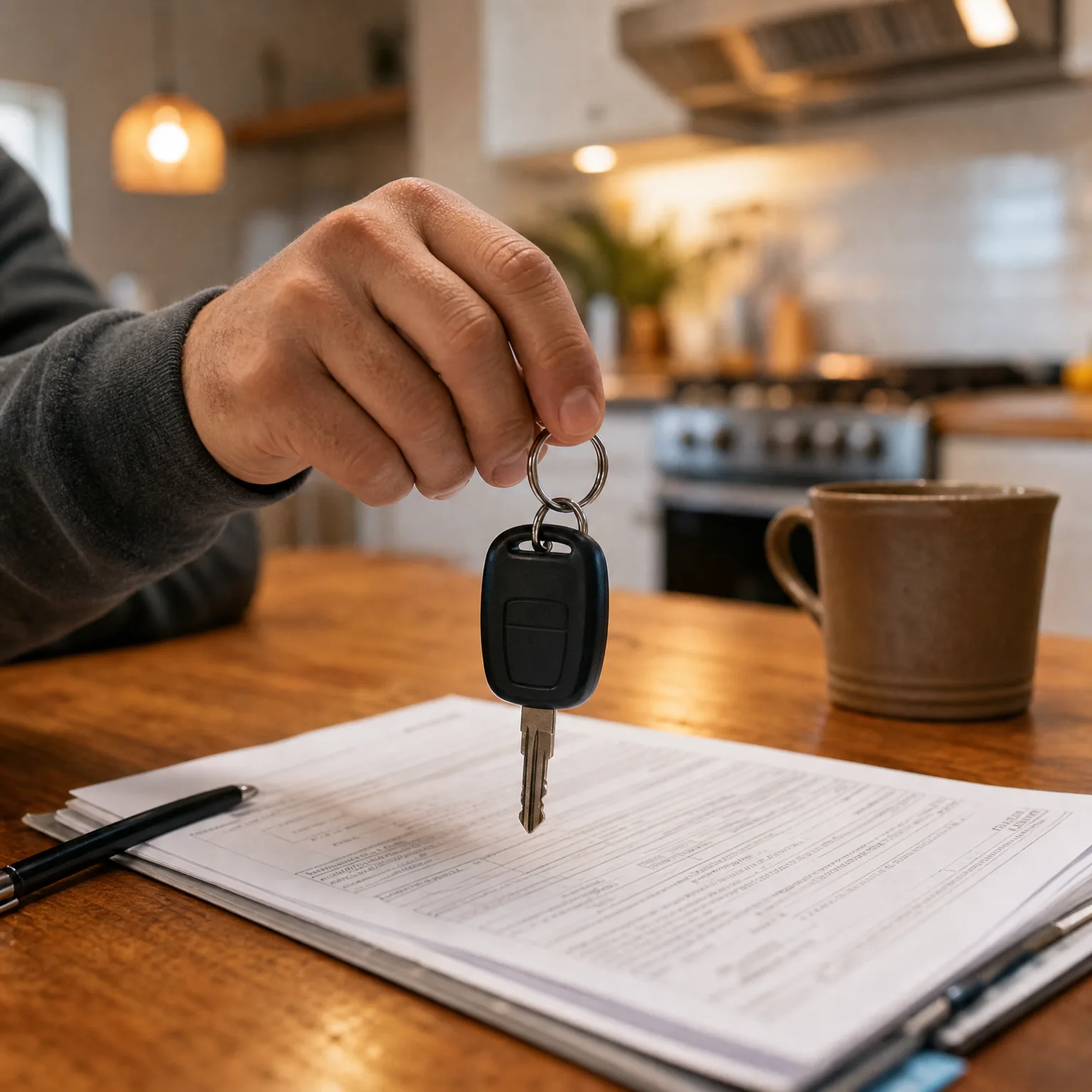

How the Two Systems Interact on a Financed Car
When you finance a car in North Carolina, you must meet both the state's liability requirement and the lender's full-coverage requirement. The state checks compliance at registration and renewal. The lender checks compliance continuously — your carrier reports any lapse or coverage change to the lienholder automatically. If you drop collision or comprehensive, the lender knows within days.
Most drivers satisfy both requirements by buying a single policy that includes liability at or above the state minimums, plus collision and comprehensive. The policy lists the lender as the lienholder. The carrier issues the DL-123 certificate for state registration and sends lien notifications to the lender. One policy, two requirement systems.
The confusion arises because the lender's requirement feels like a legal mandate. The dealership or lender often frames full coverage as something you must carry, without clarifying that it's a contract term, not a state law. Once the loan is paid off and the lien is released, the lender's requirement disappears. The state's liability requirement remains.
11.8%
North Carolina Uninsured Motorist Rate
Uninsured motorist coverage is mandatory in North Carolina and protects you when an at-fault driver has no coverage or insufficient limits.
Insurance Information Institute, 2023

What Happens When You Pay Off the Loan
When you make the final loan payment, the lender releases the lien and notifies your carrier. At that point, the lender's full-coverage requirement no longer applies. You can drop collision and comprehensive and carry only the state-required liability and uninsured motorist coverage. Many drivers keep full coverage after payoff because the car still has value and replacing it out of pocket is expensive, but the choice becomes yours.
If you're financing multiple cars on one policy, each financed vehicle carries its own lien. You cannot drop collision or comprehensive on a financed car without violating the loan contract, even if another car on the same policy is paid off. The lender's requirement applies per vehicle, not per policy.
Compare Carriers That Write Full Coverage in North Carolina
Full-coverage premiums vary widely by carrier, even for the same driver and vehicle. North Carolina licenses dozens of carriers that write collision and comprehensive coverage. Compare North Carolina carriers to find the policy that meets both the state's liability requirement and your lender's full-coverage requirement at the lowest combined premium. When you're financing multiple vehicles, small per-vehicle rate differences compound across the policy.
What the Lender Requires and Why
To prevent that loss, the lender writes a full-coverage requirement into the loan contract. Full coverage means liability plus collision plus comprehensive. Collision pays to repair or replace your car after an accident, regardless of who caused it. Comprehensive pays for non-collision damage: theft, hail, flood, fire, vandalism, hitting an animal. Together, these coverages ensure the lender can recover the loan balance if the car is destroyed.
The lender names itself as the lienholder on your insurance policy. If you file a claim and the car is totaled, the carrier pays the lender first, up to the outstanding loan balance. Any remaining payout goes to you. If you let collision or comprehensive lapse, the lender receives notice from your carrier and can force-place insurance — a more expensive policy the lender buys and adds to your loan balance. That policy protects only the lender's interest, not yours.
Get Your Free Quote
Get My North Carolina Car Insurance QuoteFrequently Asked Questions
Can I register a financed car in North Carolina with only liability insurance?
No. You can register the car with the state if you carry the required liability minimums, but your lender will force-place more expensive insurance if you do not maintain collision and comprehensive. The loan contract requires full coverage.
Does North Carolina require full coverage on leased cars?
North Carolina law does not require full coverage on any vehicle. Leasing companies require full coverage in the lease contract, just as lenders require it in loan contracts. The requirement comes from the contract, not from state law.
What happens if I drop collision coverage on a financed car?
Your carrier notifies the lienholder within days. The lender will send a notice of lapse and may force-place collision and comprehensive coverage at a higher premium, which is added to your loan balance. You also risk defaulting on the loan contract.
Do I need full coverage after I pay off my car loan in North Carolina?
No. Once the lien is released, the lender's full-coverage requirement no longer applies. You must still carry the state-required liability and uninsured motorist coverage, but collision and comprehensive become optional.
Can I choose my own collision and comprehensive deductibles on a financed car?
Yes, within limits. Most lenders allow you to choose your deductibles, but some loan contracts cap the maximum deductible at $500 or $1,000. Check your loan paperwork or ask the lender before selecting a higher deductible.
Does uninsured motorist coverage count as part of full coverage?
Uninsured motorist coverage is a separate state requirement in North Carolina. Full coverage refers to liability plus collision plus comprehensive. Uninsured motorist is mandatory regardless of whether you finance, lease, or own the car outright.